Review - Tudors At St George's 24 September 2011
A modest but very appreciative audience came to hear The Tudor Choristers
present a program music from 16th and 17 Century Tudor England on the
afternoon of Sunday 24 September. The music for the first half
represented the Catholic liturgy and opened with William Byrd's Sing Joyfully and followed by Byrd's Mass for 4 voices with Ne irascaris domine after the Gloria and Thomas Tallis' O nata lux de lumine after the Credo.
After interval 3 Madrigals added a secular 'flavour' to the program,and these were followed by Tomkins' When David Heard and Then David Mourned; two quite different versions of Hosanna to the Son of David by Tallis and Gibbons. The concert concluded with Gibbons Nunc Dimittis (from the Short service) and his magnificent motet O Clap your hands together.
Refreshments were served after the performance.
The choir donated its performance to the Church fund for the restoration of the rear balcony and the sum of $180 was raised in donations.
After interval 3 Madrigals added a secular 'flavour' to the program,and these were followed by Tomkins' When David Heard and Then David Mourned; two quite different versions of Hosanna to the Son of David by Tallis and Gibbons. The concert concluded with Gibbons Nunc Dimittis (from the Short service) and his magnificent motet O Clap your hands together.
Refreshments were served after the performance.
The choir donated its performance to the Church fund for the restoration of the rear balcony and the sum of $180 was raised in donations.

St Georges Choir (extended) to perform Allegri Miserere on Good Friday 2011 (22nd April 10am) Miserere, full name "Miserere mei, Deus" (Latin: "Have mercy on me, O God") by Italian composer Gregorio Allegri, is a setting of Psalm 51 (50) composed during the reign of Pope Urban VIII, probably during the 1630s, for use in the Sistine Chapel during matins, as part of the exclusive Tenebrae service on Wednesday and Friday of Holy Week. The service would start usually around 3AM, and during the ritual, candles would be extinguished, one by one, until one remained alight and hidden. Allegri composed his setting of the Miserere for the final act within the first lesson of the Tenebrae service. It was the last of twelve falsobordone Miserere settings composed and chanted at the service since 1514 and the most popular: at some point, it became forbidden to transcribe the music and it was allowed to be performed only at those particular services, adding to the mystery surrounding it. Writing it down or performing it elsewhere was punishable by excommunication. The setting that escaped from the Vatican is actually a conflation of verses set by Gregorio Allegri around 1638 and Tommaso Bai (also spelled "Baj"; 1650–1718) in 1714. The Miserere is written for two choirs, one of five and one of four voices, and is generally accepted to be one of the finest examples of Renaissance polyphony to survive to the present day[citation needed]. One of the choirs sings a simple version of the original Miserere chant; the other, spatially separated, sings an ornamented "commentary" on this. The piece is an example of the stile antico or prima pratica; however, its constant use of the dominant seventh chord and its emphasis on polychoral techniques certainly put it out of the range of prima pratica[citation needed]; a more accurate comparison would be to the works of Giovanni Gabrieli. Three authorised copies of the work were distributed prior to 1770 – to the Holy Roman Emperor Leopold I, to the King of Portugal, and to Padre (Giovanni Battista) Martini. However, none of them succeeded in capturing the beauty of the Miserere as performed annually in the Sistine Chapel. According to the popular story (backed up by family letters), the fourteen-year-old Mozart was visiting Rome, when he first heard the piece during the Wednesday service. Later that day, he wrote it down entirely from memory, returning to the Chapel that Friday to make minor corrections. Some time during his travels, he met the British historian Dr Charles Burney, who obtained the piece from him and took it to London, where it was published in 1771. Once the piece was published, the ban was lifted; Mozart was summoned to Rome by the Pope, only instead of excommunicating the boy, the Pope showered praises on him for his feat of musical genius. The work was also transcribed by Felix Mendelssohn in 1831 and Franz Liszt, and various other 18th and 19th century sources survive. Since the lifting of the ban, Allegri's Miserere has become one of the most popular a cappella choral works now performed. |
29th August 2010 - A Three Choirs Festival
A Festival of ChoirsThe afternoon of 29th of August saw St Georges host, as part of the final Lost Arts weekend of the Winter in Banyule Festival, a bill of soaring arrangements performed by three local choirs. As Richard Hoy astutely observed during duties as MC, you wouldn't have judged choral singing a 'lost art' by the numbers engaging in the concert that day. Each choir offered the audience a repertoire so unique and vigorous as to not only undermine the endangered nature of the art, but also any impression that it might be stagnating. Our own in-house choir, the St Georges Choir and Friends (named so by the talented Roger Brown due to the reinforcement such friends provide at various times throughout the year) began proceedings with Batten's rousing Praise the Lord, all ye heathens, canvassing a spectrum that included traditional Anglican chant, works in Latin by Palestrina, Croce and Elgar, and Gibbons' almost lulling Almighty and Everlasting God. I can report that Roger was very pleased with our performance (much to this reporter's relief!) and it was one that all in the choir enjoyed immensely, especially in front of such well-packed pews! (In which, slightly perturbingly, I noticed my Year 8 English teacher, purple hair streaks still luminous ten years on. But she seemed to epitomise the audience's reaction to the whole concert - a beaming appreciation of the afternoon on offer, and an awe at the extremely high standard evident in the performances generally).  St George's choir at the conclusion of their bracket
The Tudors Choristers, conducted by Andrew Blackburn, then swept aside any of those aforementioned prejudices with a remarkably polished, agile performance given all tongues were firmly in cheek for much of its length! To describe a musical offering as a feast is hardly novel and definitely cliched, but in this case it is unavoidable given the overarching themes of food and celebration. They performed music set to historical texts including Pastyme with good company (Henry VIII), market haggling (New Oysters!, Thomas Ravencroft), Fragments from his dish; 5 Songs by Bob Chilcott and others, though Mashed Potato/Love Song (Sidney Hoddes) was an obvious crowd-pleaser. Who can resist someone justifying to his or her lover why, in a contest between said lover and a 'third-helping of mashed potato', the dish would win?!  The Tudor Choristers
Diversifying the choral menu further, the Heidelberg Choral Society, led by Matthew Toogood, performed two choruses (both the witches' chorus and lamenting Patria oppressa) from their recent season of Verdi's Macbeth. They completed the audience's operatic experience with the same composer's Brindisi (also from Macbeth), soloist Jodie Debono's arresting voice commanding the entire church. The combined three choirs singing the Hallelujah Chorus (from Handel's Messiah) was a wonderfully energetic finale that lingered on all present even after its conclusion, as did the afternoon generally. The civility of the whole affair continued with afternoon tea served in the hall, wherein the post-performance buzz of both those on-stage and off was palpable. Hopefully this will be the first of many such showcases at St Georges of the vitality and diversity still evident in the 'lost art' of choral singing! Sophie Curzon-Siggers Mp3 recordings of the items sung by St. George's choir are here |
A Piece of Australian Musical History at St. George's (link)
The choir contribution to Bushfire Relief

A full report of this event and the choir trip to Beechworth is here
October/November 2009 - CD in preparation
Psalms from St George's

Listen to some early test tracks:
Psalm 24
Psalm 51
Psalm 105
Psalm 121
Psalm 130
Easter Anthems
Psalm 51 (take 2)
Psalm 23 (2 takes)
Psalm 20
Psalm 46
Psalm 46 - take 2
Psalm 20 - take 2
Psalm 96
Sicut Cervus - Palestrina (from Ps. 51)
O Sing Joyfully - Batten (from Ps. 81)
Psalm 96 -take 2
Psalm 84
Psalm 100
Psalm 111
Not unto us O Lord - Walmisley (from Psalm 115)
O praise the Lord all ye heathen - Batten (from Psalm 117)
Hide not thou thy face O Lord (from Psalm 27)
Psalm 124
And this is a Psalm you will NOT find in the psalter or on the CD!!
We anticipate availability of this CD for September/October 2009
21st December 2008 - 9pm
Service of Nine Lessons and Carols

The traditional candlelight service of 9 Lessons lead by the Choir of St. Georges Church.
Sample carol from the service
30th November 2008 - 7pm
Evensong for the
First Sunday in
Advent
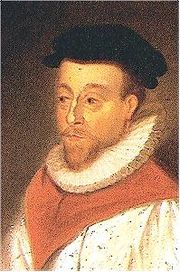
Music of Orlando Gibbons 1583-1625
Short Service in A FlatVerse Anthem - This is the Record of John
Responses - Smith of Durham
28th September 2008 - the Choir CD is here.
On sale from St. George's church - price $10 (AUD) plus postage if applicable.
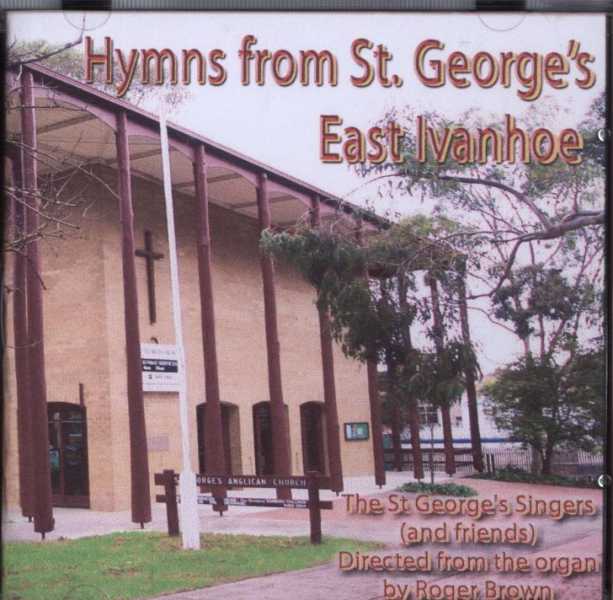
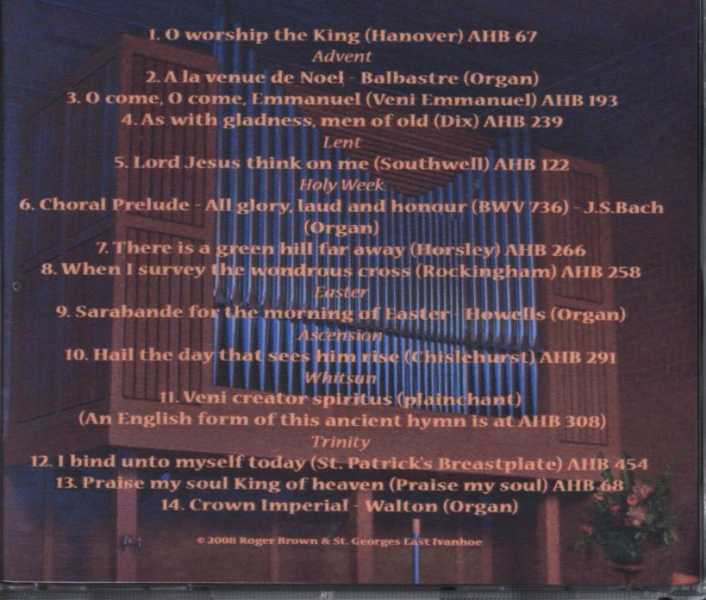
Preview some sample tracks:
When I survey the wondrous crossThere is a green hill far away
Jesus lives
Praise my soul, the King of Heaven
Veni Creator Spiritus
Jesus lives (2)
O worship the King
As with gladness men of old
Lord Jesus think on me
Hail the day that sees him rise
O come O come Emmanuel
I bind unto myself today